Balancing work and life isn’t easy at the best of times. Demanding jobs, tight deadlines, and extra hours can make it hard to find the time to dedicate to life outside work; whether that’s with family, doing hobbies, taking vacations, studying, exercising, or socialising.
However, investing time and energy in achieving a successful work-life balance is worthwhile. Research has found that people who believe they have a healthy work-life balance are generally more satisfied with their life, and have better physical and mental health.[1] By contrast, those who work long hours report increased anxiety, irritability, and in some cases depression.[2]
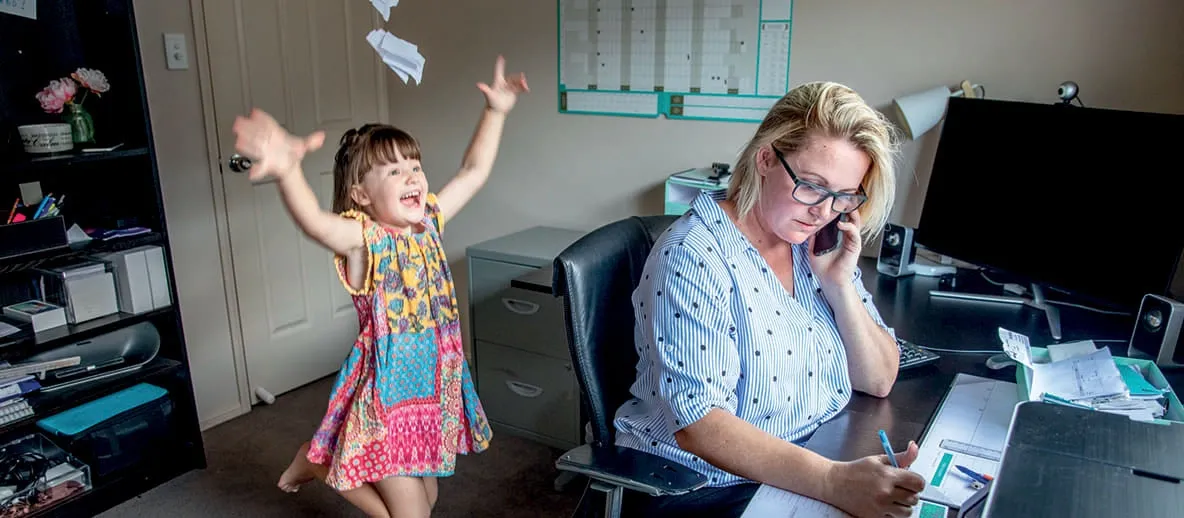
During extraordinary, unforeseen circumstances such as those we find ourselves in today, finding a healthy work-life balance can be even harder than normal. Many of us are now working from home, a setup we’re not used to. We might not have a dedicated, fully-equipped home office complete with suitable desk and ergonomic chair; we may be balancing working a full working day with looking after and home schooling young children; we might be looking after elderly or disabled relatives; and we might be struggling with concerns related to the current global COVID-19 pandemic.
There are some simple steps that you can take to help you find work-life balance during this extended period of time when your work environment and living environment are one and the same.
Create a workspace
As we’ve mentioned in previous posts, it’s tempting when working from home to stay in our pyjamas and work from our beds. Try and avoid this where you can; instead, create a workspace for yourself – whether that’s the dining room table, the kitchen bench, or the study desk. This will help you to keep your work separate from everything else, and will make it most straightforward to switch off and “leave” work at the end of the day. Some people also find it helps to get dressed to work, even just to be able then change into different clothes at the end of the working day. It’s all about drawing a line under your working hours, so you can be truly engaged and productive during them, and your free time can begin once they are done.
Partner with your manager to create a schedule that works for you
Depending on how flexible your working arrangements you are, you might have to follow a strict timetable, or may be able to flexibly work around other commitments and needs. Speak to your manager and HR team about the specific challenges you face, whether it be caregiving during typical working hours or difficulty being able to meet deadlines or disconnect due to an increased workload. Open and consistent communication with your manager about flexibility in terms of working hours or a reshifting of priorities, can help you to remain professionally effective while meeting your most fundamental commitments to yourself and others. Where possible, set and stick to a consistent schedule that lets you know on a daily basis when the working day begins and ends.
Caregivers, be kind to yourselves
It’s not easy being all things at all time to all people. You can’t work full-time and be a full-time caregiver and a full-time teacher all at the same time. In addition to talking with your to your manager about flexible working options, try different activities to find out which ones will keep your children occupied or entertain your elderly relatives while you take important calls, and arrange your working hours around their needs where you can, working while they nap or when they’ve gone to bed. Talk to other people in the same situation, reassure yourself that you’re doing the best you can, and enjoy the opportunity to spend additional time at home with your family.
Have lunch!
It might be tempting to get all your hours done in one go; or you might find yourself so wrapped up in a project that you don’t realise the time. It’s often harder to stop for lunch when working from home; especially without the movement of colleagues getting up to go to the kitchen or out to eat. Try and schedule in a lunch break; not only will this make sure you eat properly and have the energy you need for the rest of the day, but it will also add structure to your day.
Put your work things away at the end of the day
Unless you have a dedicated office space, it’s likely you’re working from part of the house that is normally used for something else. Take a few minutes at the end of each day to clear things away, and put the area back into home rather than office mode. This trick will also help you to mentally clock out and get back onto “life” rather than “work” time. If you are spreading your working hours around childcare, close the door to your workspace so it’s out of sight and out of mind when not being used.
Plan activities for the evening
Whether it’s a game with your children, a video call with friends, or a candlelit dinner with your partner, scheduling in activities for the evening will help you finish work on time and make the most of the free time you have. It also helps you resist the temptation to continue working well into the night because you don’t have anywhere to be.
Remember that work-life balance is personal
As Dr. Dan Ober, Associate Medical Director, said during a recent research discussion, “Work-life balance is individual for each of us, and the achievement of it depends on how you define it and whether you are satisfied with what you have.”
There is no single solution for everyone; but rather each individual should consider recommended advice, and adapt it to their own situation to achieve their unique work-life balance.
Sources:
[1] Haar J, Russo M, Sune A, Ollier-Malaterre A. Outcomes of Work-Life Balance on Job Satisfaction, Life Satisfaction and Mental Health: A Study across Seven Cultures. Journal of Vocational Behavior 85(3):361-373. September 2014. doi:10.1016/j.jvb.2014.08.010.
[2] Work-life balance. Mental Health Foundation. https://www.mentalhealth.org.uk/a-to-z/w/work-life-balance. Accessed March 30, 2020.